“Mass luxury is not luxury at all, because anyone can buy it: it’s available everywhere and produced in enormous quantities. Real luxury is about scarcity.”
Patrick Grant, director Norton & Sons, Savile Row.
It’s undeniable that Gucci are having a moment. More than a moment one could argue, with Forbes putting its brand value at $1.7billion dollars as of May 2017.
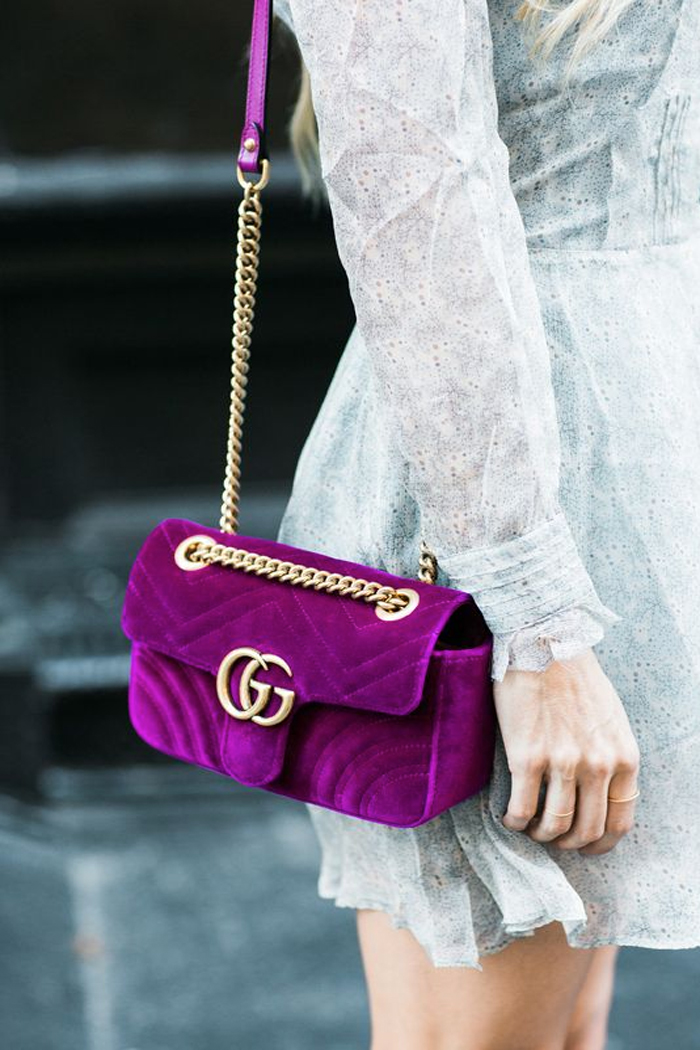
Leather goods make up 55% of its annual revenue, with the GG Marmont quilted leather handbag (RRP $1980), the most searched bag on the web in 2017, according to Lyst.
I was struck while roaming about one of Melbourne’s biggest shopping malls the other day with just how ubiquitous this bag has become. Wandering around the luxury precinct, where the likes of Dior, Louis Vuitton, Tiffany & Co. and Givenchy reside, I counted nine Marmont bags hanging off the shoulders of young teenage girls to professional women in their 40’s. NINE. This $2k bag was everywhere.
Two things piqued my curiosity: how on earth could an 18-year-old girl afford such a bag, and why, all of sudden, is having the gold GG logo stamped on everything from belts, shoes and bags a sign of being fashionable?
My Nirvana-era grunge sensibility baulked at such naked brand adoration. Surely, I mused to myself, we’re not going back to brand-name malarkey? We reacted to this as a global community back in the early 90s.
But, perhaps – no. One young woman styled the bag with a pair of denim cut-off shorts, a white tee and Adidas trainers. It afforded an almost nonchalant, cavalier grandeur, despite being casually dressed; her outfit was elevated and relevant because of the large logo she carried on her shoulder.
It’s extremely clever marketing by Gucci, harking back to an era before Kurt Cobain, once again getting trendy people to pay to advertise their product to other potentially trendy people. Had she been carrying a nondescript bag, she simply wouldn’t have been part of the #guccigang.
Look that one up if you’re out of the hashtag loop.
So is it luxury you’re buying into if you invest in a Marmont? I would argue that you’re buying into a trend, and one that’s been round before, and that true luxury is about scarcity.
There’s a reason a Himalayan Nilo white crocodile skin Hermès handbag costs $300K – only one or two are made a year. Currently they are the lowest production run of handbags in the world, with the highest price.
The need to fit into a tribe – to signal to those around you that you’re fashionable, wealthy or desirable is nothing new. Dandy’s have been doing that since Marie Antoinette’s time.
But paying $1980 to do so? ‘Fools and their money are easily parted,’ as my Grandmother liked to say, but that’s a story for another day.
2 comments
Yeah, Rusty. Our relationship with brand name ‘luxury’ was changing, or even already had changed. Let’s hope it doesn’t change back!
As you say luxury items have always been available, and often very visible eg I can’t help think of the classic YSL luggage, but as we start to talk more and more about the growing divide and concentration of wealth I think the relationship we have to items like a very visible Gucci bag is also changing. And alongside that divide, being conscious of how items are made and materials sourced also changes how we relate to the items and those who wear them. Plus some of the more mass marketed luxury items also verge on a level of tackiness now. A look at me style of wealth that no longer fits with where we are as a society, and I often wonder how many of those who wear those more identifiable luxury brands are more new wealth than old, and feel a need to express that? For me luxury has always been about the quality of the product, the craftmanship, and history of the brand rather that obvious branding. Scarcity is part of that (I love buying limited edition prints for example), or perhaps the feel of scarcity generated by a price point that is above average and requires serious consideration before purchase eg Is it really luxury if it becomes a more casual purchase thanks to a certain level of wealth? Even buying $300,000 bag can surely become passe when you measure your wealth in billions, though in that case I can see a certain level of, if not luxury, but value? (not quite the right word but I’ll need more coffee to find a more appropriate one) that could come from having something no one else has.